
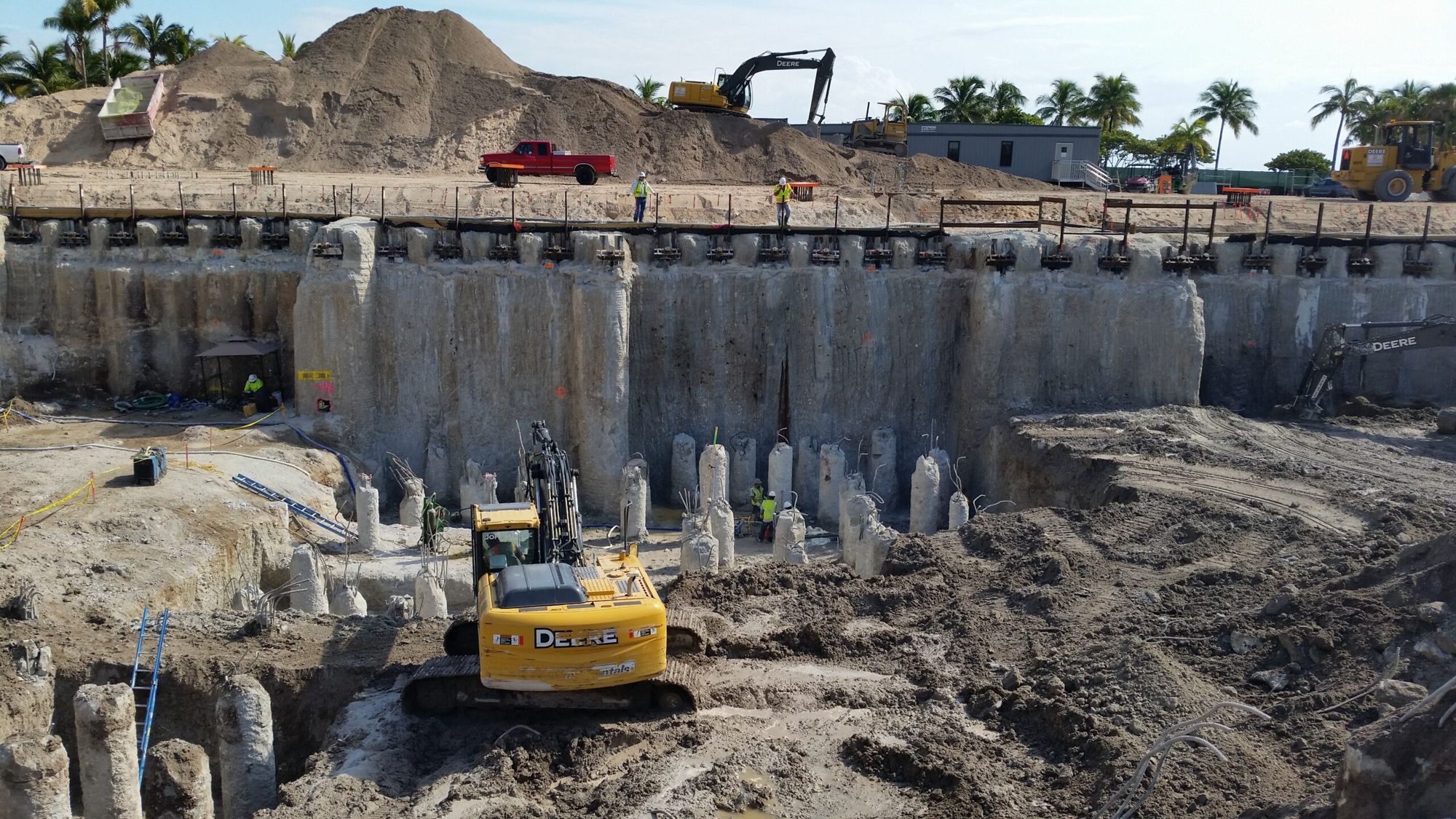
CETCO Bentogrout® Injection in South Florida
Bentogrout is an engineered bentonite grout that swells on contact with water to form a flexible, watertight barrier. We use it to cut off groundwater behind and beneath below-grade concrete.
South FloridaConcrete repair services
Bentogrout® Injection inSouth Florida
A flexible clay barrier against groundwater
CETCO Bentogrout® is a high-solids bentonite grout. Bentonite is a natural clay that swells many times its dry volume when it meets water. Injected behind a wall or under a slab, it fills voids and soil pores and forms a dense, flexible membrane that blocks groundwater from reaching the concrete.
Because bentonite stays plastic, the barrier can self-seal around small movements instead of cracking. That makes it a strong choice for below-grade structures in South Florida, where garages, basements and elevator pits sit in saturated sand and the water table rises and falls with the tide and the seasons.
We use Bentogrout for curtain grouting, for sealing leaking below-grade walls from the positive side, and for filling voids where a flexible, water-stopping material is a better fit than cementitious grout.
At a glance
- Best forGroundwater control below grade
- MaterialCETCO Bentogrout®, high-solids bentonite grout
- Typical locationsGarage walls, basements, elevator pits, foundations
- ApproachInjected from inside to seal on the soil side
How it works
Our bentogrout® injection process
Assess the leak
We review where and how water enters, the soil conditions and any prior waterproofing.
Plan the grid
Carefully plot injection points to create a continuous barrier across the leaking area.
Drill through
We drill ports through the wall or slab to reach the soil on the outside face.
Inject Bentogrout
Bentonite grout is pumped under controlled pressure to fill voids and form the barrier.
Verify
We check the area for remaining leaks and inject additional points if needed.
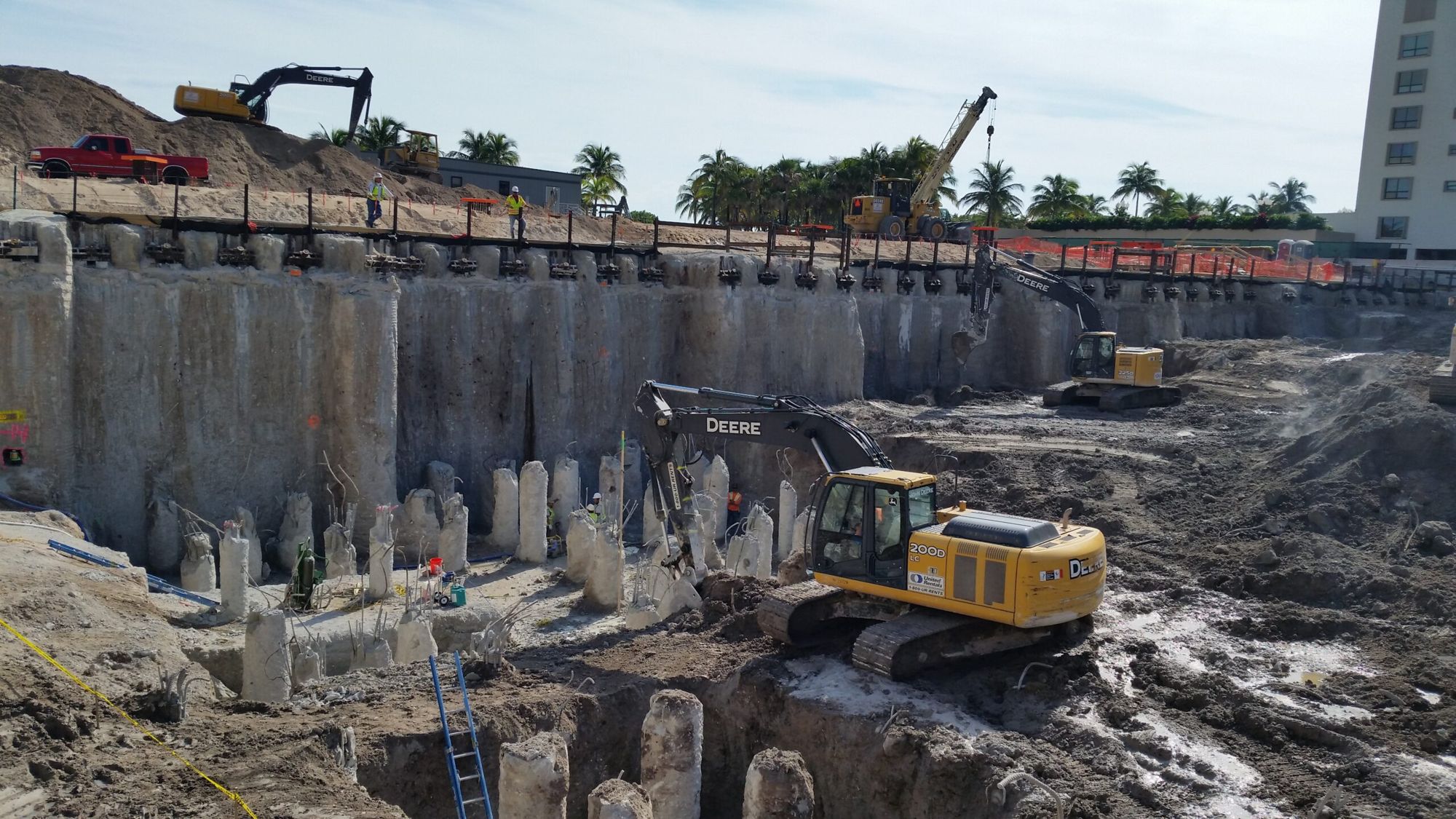
Applications
Where we use Bentogrout
- Below-grade parking garage walls
- Basements and foundation walls
- Elevator and sump pits
- Tunnels and vaults
- Behind seawalls and retaining walls
- Under slabs with groundwater pressure
- Failed exterior waterproofing
- Annular spaces around pipes
Warning signs
When to call about bentogrout® injection
Not sure what you are looking at? Send us a photo or book a site visit and we will tell you what the crack or leak needs.
Widespread wall seepage
When water comes through many small cracks over a large wall area, a soil-side barrier is often more effective than sealing each crack.
Failed exterior membrane
If the original waterproofing behind a wall has failed, curtain grouting can replace it without excavation.
Leaks that move
Sealing one crack only for water to appear nearby is a sign the water needs to be stopped outside the wall.
Hydrostatic pressure
Floors and walls below the water table that seep under pressure are good candidates.
Efflorescence
Mineral deposits across a wall show water is passing through the concrete itself.
Elevator pit water
Recurring water in pits is a common Bentogrout application.
Choosing the right repair
Bentogrout vs. polyurethane
Polyurethane injection seals individual cracks and joints from inside the concrete. Bentogrout works on the soil side, building a barrier across a whole area. For a single leaking crack, polyurethane is usually faster. For a wall that seeps everywhere, or where the original membrane has failed, a bentonite curtain is often the better long-term answer.
We are glad to explain the tradeoffs for your structure and will often use both on the same project.
FAQ
Bentogrout® Injection questions
What is Bentogrout?
Bentogrout is a bentonite clay grout made by CETCO. It swells when wet to form a flexible, watertight barrier and is used for groundwater control and below-grade waterproofing.
Does Bentogrout require excavation?
No. It is injected through ports drilled from the inside of the structure, so the soil outside does not need to be dug up.
Is bentonite grout environmentally safe?
Bentonite is a naturally occurring clay. Product data and approvals for a specific project come from the manufacturer’s documentation and the project engineer.
How long does a Bentogrout barrier last?
Bentonite remains plastic and continues to swell when wet, so a properly placed barrier is designed for long-term performance.
Can Bentogrout be used with other repairs?
Yes. It is often combined with polyurethane crack injection and concrete restoration as part of a below-grade waterproofing plan.
Related services
More ways we protect concrete
Serving Palm Beach County, Broward County, Miami-Dade County.
Free on-site estimate
Get a bentogrout® injection estimate
Tell us what you are seeing and where. We will inspect the site, explain the repair in plain terms and give you a written estimate at no cost.