
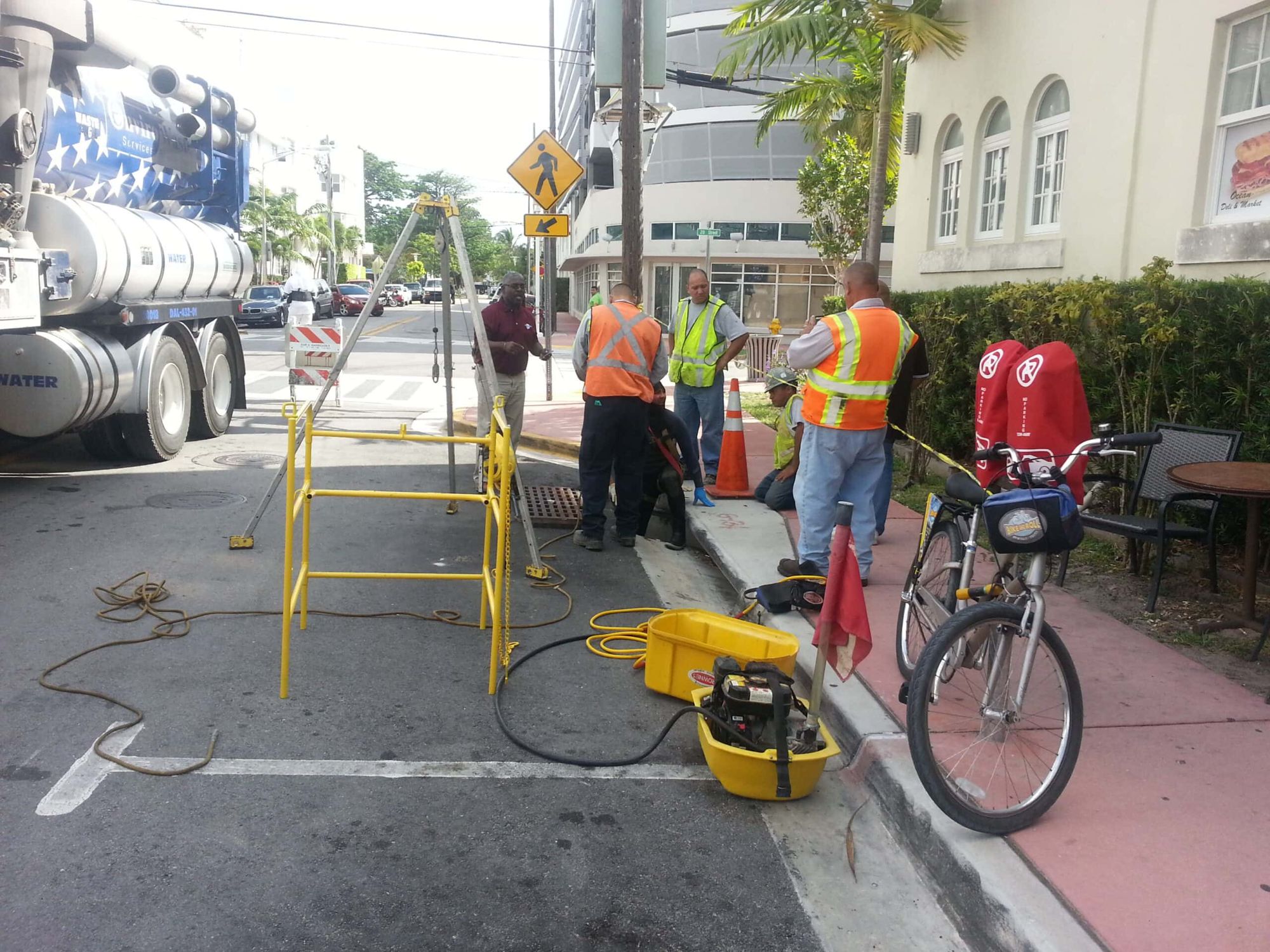
Concrete Grout Injection in South Florida
Voids under slabs, sidewalks and seawalls lead to settlement, cracking and collapse. We pressure-inject grout to fill those voids and stabilize the soil, so the concrete above has solid support again.
South FloridaConcrete repair services
Grout Injection inSouth Florida
Solid support under concrete, without excavation
Grout injection, also called pressure grouting, pumps cementitious or chemical grout through drilled ports into the voids and loose soils beneath or behind concrete. The grout fills the empty space, and reinforces the surrounding soil and gives slabs, walls and footings even support again.
South Florida’s sandy soils and high water table make voids common. Water moving through a broken pipe, a failing seawall or a leaking joint can wash sand away and leave hollow spaces under slabs and pavement. Those voids grow until the concrete cracks or the surface collapses.
We pump grout with a ChemGrout CG550P, a heavy-duty grout plant that lets us control mix and pressure precisely, which is what keeps the grout where it is needed instead of lifting or damaging the structure.
At a glance
- Best forVoids, settlement and loose soils
- MaterialCementitious, chemical or bentonite grout
- Typical locationsSlabs on grade, sidewalks, seawalls, footings, pipes
- DisruptionSmall drilled ports. No excavation
How it works
Our grout injection process
Locate the voids
We investigate the settlement or hollow areas and identify where the soil has been lost.
Drill injection ports
Ports are drilled through the slab or wall on a grid sized to the void and soil conditions.
Pump grout
Grout is injected under monitored pressure, port by port, until each area is filled.
Monitor movement
We watch the surface during injection to avoid lifting or stressing the structure.
Patch and verify
Ports are patched and the slab is checked for solid support across the repair area.
Applications
Where we use grout injection
- Voids under slabs on grade
- Settling sidewalks and pool decks
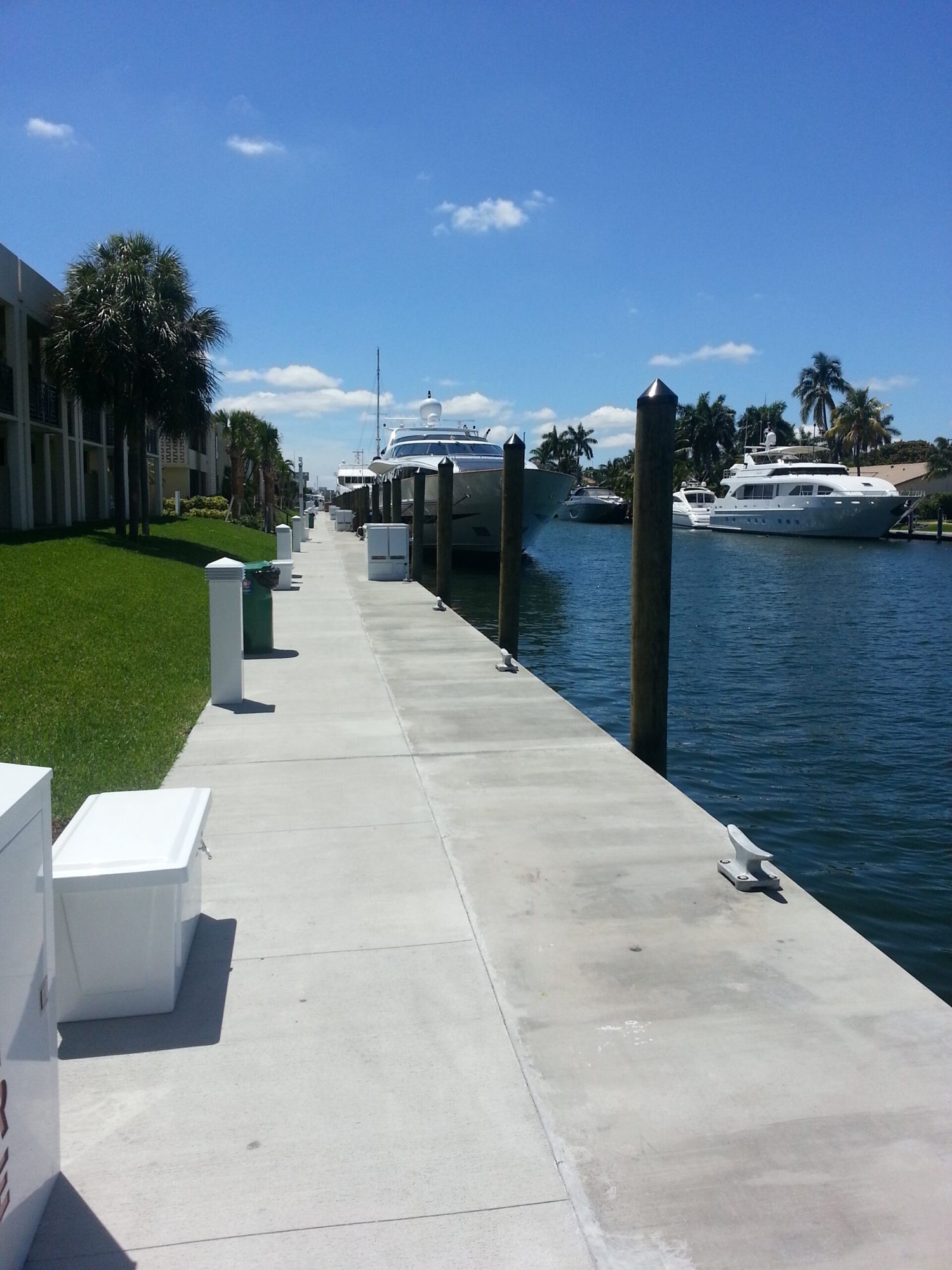
- Behind seawalls and bulkheads
- Around leaking pipes and drains
- Under footings and foundations
- Sinkholes and soil loss
- Abandoned pipes and tanks
- Utility vaults and manholes
Warning signs
When to call about grout injection
Not sure what you are looking at? Send us a photo or book a site visit and we will tell you what the crack or leak needs.
Sunken or tilting slabs
Slabs that are dropping or tilting usually have lost support beneath them.
Hollow sounds under concrete
Tapping that sounds hollow over a large area can mean a void below the slab.
Sinkholes near seawalls
Depressions behind a seawall mean soil is washing out through the wall.
Cracks that keep coming back
Repeated cracking in the same slab often traces back to poor support underneath.
Gaps under slab edges
Visible gaps between a slab and the soil show washout is already happening.
Doors and fixtures out of level
In buildings, settlement can show up as sticking doors or uneven floors.
Choosing the right repair
Choosing the right grout
Cementitious grouts are strong and economical for filling large voids. Chemical grouts penetrate fine sands and set quickly, which helps when water is present. Bentonite grouts such as CETCO Bentogrout stay flexible, sealing off groundwater causing leaks. We match the grout to the soil, the water conditions and the engineer’s specification.
Grout injection is often used in conjunction with seawall injection and surface concrete crack repair, so the cause of the soil loss is sealed as well as the void being filled.
FAQ
Grout Injection questions
What causes voids under concrete slabs?
In South Florida, the most common causes are water washing sand away through cracks, joints, failed seawalls or broken pipes, and soils that were not fully compacted during construction.
Will grout injection lift my slab?
The goal of void filling is to restore support, not to lift. We monitor pressure and the surface during injection to avoid unwanted movement. Where lifting is needed, it is planned with the engineer.
How large are the drill holes?
Injection ports are small, typically well under an inch in diameter for most work, and they are patched when we finish.
Can grout injection fix a sinkhole behind a seawall?
Grout can fill the void and stabilize the soil, but the leak in the seawall that caused it also needs to be sealed. We do both.
Is grout injection cheaper than replacing a slab?
In most cases, yes. It avoids demolition, removal and new concrete, and the area is back in use quickly.
Related services
More ways we protect concrete
Serving Palm Beach County, Broward County, Miami-Dade County.
Free on-site estimate
Get a grout injection estimate
Tell us what you are seeing and where. We will inspect the site, explain the repair in plain terms and give you a written estimate at no cost.