
Epoxy Crack Injection in South Florida
Structural crack repair for slabs, beams, columns and walls. We pressure-inject low-viscosity epoxy that bonds the concrete back together and restores its load-carrying strength, without tearing anything out.
South FloridaConcrete repair services
Epoxy Injection inSouth Florida
Structural repair for cracks that have stopped moving
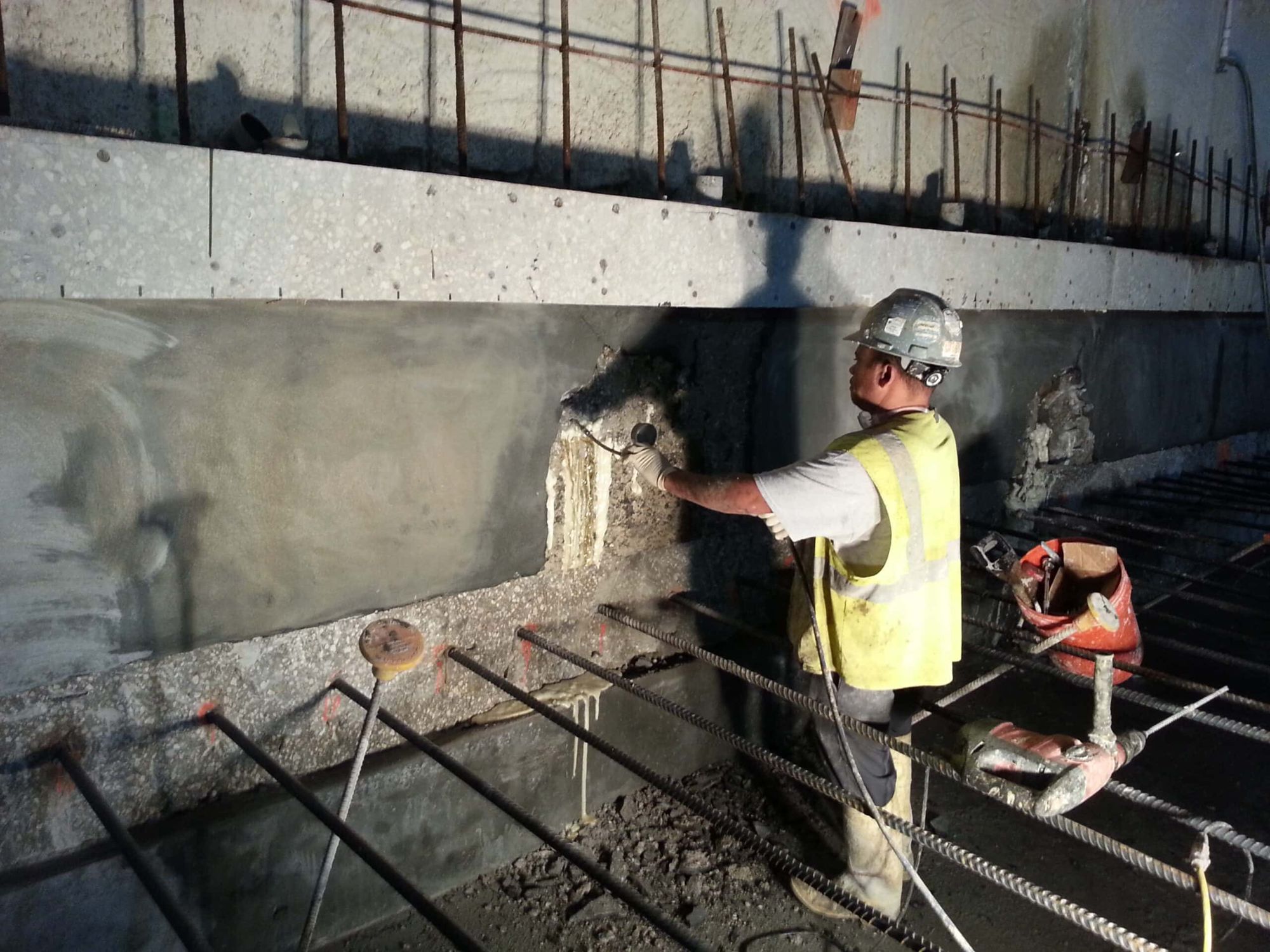
Epoxy injection is the standard method for repairing dormant structural cracks in concrete. Low-viscosity epoxy resin is injected under controlled pressure through surface ports until the crack is filled from the back face to the front. Once cured, the bond is typically stronger than the surrounding concrete, so the member works as one piece again.
In South Florida, cracks rarely stay a cosmetic problem for long. Salt air, wind-driven rain and a high water table push moisture and chlorides into any opening, and that moisture reaches the reinforcing steel. Sealing structural cracks with epoxy cuts off that path and helps stop the rust, expansion and spalling that follow.
PRS meters and mixes epoxy with a Lily Corp CD-15 cabinet rather than hand-mixed cartridges. That gives a consistent mix ratio and steady pressure from the first port to the last, which matters on long runs of crack in garages, decks and foundation walls.
At a glance
- Best forDormant, non-moving structural cracks
- MaterialLow-viscosity structural epoxy, two-part
- Typical locationsSlabs, beams, columns, foundation and shear walls
- DisruptionMinimal. No demolition; areas return to service after cure
How it works
Our epoxy injection process
Inspect and map
We measure crack width, length and depth, confirm whether the crack is still moving, and review any engineer’s report or specification.
Prepare the surface
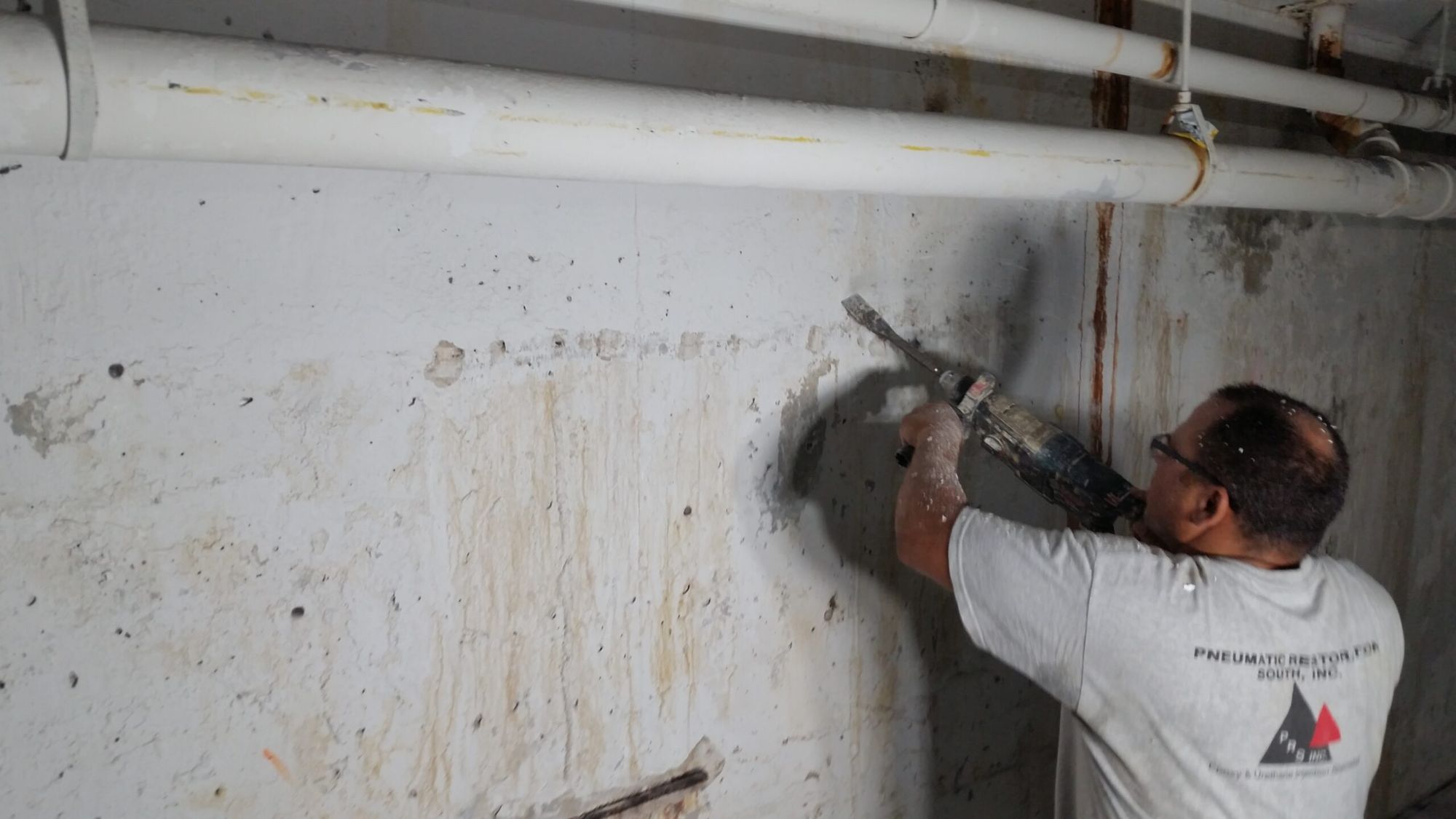
Cracks are cleaned of dust, laitance and old sealant so the cap seal and ports bond to sound concrete.
Set ports and seal
Injection ports are spaced along the crack and the surface is capped with a paste epoxy so resin stays inside the member.
Inject under pressure
Epoxy is pumped port to port, starting at the lowest point, until resin travels through the full depth of the crack.
Cure and finish
After curing we remove ports and cap, grind the surface flush and document the work for your records.
Applications
Where we use epoxy injection
- Parking garage slabs, beams and columns
- Condominium balconies and walkways
- Foundation and basement walls
- Load-bearing and shear walls
- Elevated decks and plaza slabs
- Seawall caps and marine structures
- Industrial floors and equipment pads
- Tanks, vaults and utility structures
Warning signs
When to call about epoxy injection
Not sure what you are looking at? Send us a photo or book a site visit and we will tell you what the crack or leak needs.
Cracks that are getting wider
A crack you can fit a coin edge into, or one that has grown since you last measured, needs an assessment.
Horizontal or diagonal cracks
These often point to load or movement in walls, beams and foundations rather than simple shrinkage.
Rust stains or exposed rebar
Orange streaks mean water has reached the steel. Left alone, corrosion will crack and spall more concrete.
Spalling around cracks
Concrete breaking away at the edges of a crack is a sign of corrosion pressure from inside the member.
Water through the crack
If the crack is actively leaking, we will usually stop the water first. See polyurethane injection.
Uneven or sagging surfaces
Settlement under slabs may call for grout injection to fill voids before cracks are repaired.
Choosing the right repair
Epoxy or polyurethane?
Epoxy is rigid and structural. It is the right choice when the goal is to restore strength in a crack that is no longer moving. Polyurethane is flexible and reacts with water, which makes it the right choice for active leaks and cracks that open and close with temperature or load.
Many South Florida projects need both. A garage ceiling crack that is leaking might get polyurethane to stop the water, then epoxy where the engineer calls for a structural repair. We will tell you which one your crack needs and why.
FAQ
Epoxy Injection questions
How long does epoxy crack injection last?
When it is used on the right kind of crack, epoxy injection is a permanent structural repair. The cured epoxy is typically stronger than the concrete around it. If the crack was caused by ongoing movement, that cause has to be addressed too, which is why we assess every crack before injecting.
Can epoxy injection be used on a leaking crack?
Epoxy needs a reasonably dry crack to bond well. For cracks with active water flow we normally stop the leak with polyurethane first, then perform structural epoxy injection if the engineer requires it.
Do you need an engineer before epoxy injection?
Not for every crack. For structural members, SB 4-D milestone repairs and condo or commercial buildings, we work from the engineer of record’s repair specification and coordinate directly with them.
How disruptive is the work?
There is no demolition. Work areas are taped off while ports are set, injected and cured, and most areas return to normal use soon after the epoxy cures.
What does epoxy crack injection cost?
Cost depends on the total length of crack, its width and depth, access and the epoxy specified. We price after an on-site inspection, and the estimate is free.
Related services
More ways we protect concrete
Serving Palm Beach County, Broward County, Miami-Dade County.
Free on-site estimate
Get a epoxy injection estimate
Tell us what you are seeing and where. We will inspect the site, explain the repair in plain terms and give you a written estimate at no cost.